We were each assigned a different book of the horror genre. Some of my peers complained about their pre-selected stories and made excuses that failed to exempt them. I was worried that my assigned story wouldn’t be horrific enough.
Horror isn’t my go-to genre, so when I’m in the mood to step into those dark worlds, it’s because I’m hungering to catch and overpower what goes bump in the night. Ghosts, demons, witches, vampires, werewolves—I’ve met them all and returned fairly unscathed.
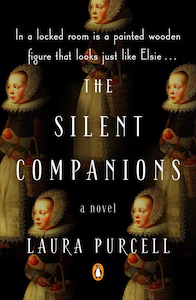
So, imagine my reaction when I read the blurb of the book that I was assigned, The Silent Companions: a story about realistically painted dummy boards wreaking havoc in an old, Victorian-era country estate.
Dummy boards, I thought? Was this some kind of joke?
If it were, it would certainly be one of the cruelest.
The aforementioned estate was called the Bridge, and it was home to Rupert Bainbridge, Elsie Livingstone’s husband, who had suddenly passed away and left her a widow. The Bainbridge family had quite a history of death that inspired certain rumors among the villagers. Mrs. Bainbridge, however, was not one to entertain ideas of spirits and hauntings. She was a strong, rational woman who wanted to dispel the fears and restore the village. Jolyon, her brother, was no less business-minded.
As a result of the accidents and rumors over the years, staff was lacking. Mrs. Holt, the Bridge’s housekeeper, was willing to let me work alongside her only two other housemaids, Helen and Mabel. We were more privileged than most servants, each having our own modest yet pleasant guest bedroom. I had very little in common with the girls, though. Helen was friendly, but run-of-the-mill. And Mabel, well, she couldn’t read.
I did what any other restless pagewalker-disguised-as-a-housemaid would do and frequented the library—or at least a sorry excuse for a library. Far from grand, it was dark, musty, and small. Only a few bookcases were lined with histories (including one about silent companions), herbal remedies, and some fiction. Sarah Bainbridge, Rupert’s cousin, took an interest in reading. Having a fellow reader around was nice, even though she could be somewhat air-headed.
The strange happenings began with saw-like hissing sounds in the night that led up to the garret, where Mrs. Bainbridge and Sarah soon discovered a pair of silent companions, a girl and a boy. They also uncovered two diaries belonging to Sarah’s ancestor that she later found contained some harrowing answers.
Since the discovery, companions seemed to manifest out of thin air. At first, Mrs. Bainbridge suspected someone was playing a prank, but obviously none of us were. The boy companion snuck up on me once. Despite the initial fright he gave me, I took a particular liking to him. He reminded me of myself when I was his age: observant, mischievous, and daring. I sensed that he, unlike the others, was not fond of the girl. His ink-black stare and the subtle ways in which it would shift to her told me plenty. It was fairly amusing. Of course, he wasn’t fond of me or the other residents either. Like his fellow companions, he was always watching, waiting.
Admittedly, I was less worried about the companions than the black cat, Jasper. It’s true what they say: animals can sense things that humans cannot—and animals in written worlds can often sense something unusual about me. They very well know I am human: I look, act, and smell the part. Yet it’s as if they can get a whiff of a previous universe on me, and it raises hairs.
Jasper seemed to follow only two people around, one of whom was me. At times I felt his green gaze burning into my back, as though he were trying to decipher my true identity, but whenever our eyes met, he’d flee.
After a few deadly incidents, I suspected I was next. I wasn’t new to dealing with the kind of sorcery going on in the Bridge. I had concocted a glass bottle of urine and pins and needles and hid it under my bed. Strange and disgusting, yes, but the practice is rooted in folklore that permeates many worlds and, most importantly, it worked. The companions and their mysterious puppeteer couldn’t harm me.
Unfortunately the others were not safe, and following the aftermath, I was hunted by that same faceless force.
Like you would find in a video game, there is always an exit option for a pagewalker. I’m not trapped once I enter a story. I can step out at any time. But I’m stubborn. I hate quitting. I want to triumph. And I didn’t want to flunk my assignment.
With my knowledge in folk magic and protective charms, I kept the malevolent force at bay and even unmasked it. I couldn’t say I was surprised. There had been more than one hint from the get-go. But then I unearthed more secrets, and I realized that this wicked entity had destroyed so much more, including the love between a mother and her child.
I wanted to trap this entity, ignite it with hellfire, and watch it burn. I had the means. But I couldn’t, for pagewalkers are forbidden from crossing lines that could drastically change the plot. And so I let the story unfold as it had been written, stepped out, and turned in my assignment, equally furious and miserable.
Sometimes the real horror is having to accept that some evil is beyond your power, and there is nothing you can do about it.
 Pagewalking